
What happens when a child who has grown up surrounded by the African bush is given the opportunity to spend time with a rescued wild animal?
Perhaps the answer is more important than we think.
At DAKTARI Bush School, near Hoedspruit in Limpopo, children don’t simply learn about wildlife from a textbook. They meet animals, observe them, care for them and spend time learning about the environment around them. Conservation education South Africa.
Because conservation isn’t only about protecting animals.
It is also about helping people understand why nature matters.
Conservation begins with the next generation
South Africa is famous around the world for its wildlife.
Visitors come to see elephants, lions, rhinos, giraffes and countless other species in their natural habitats. Protected areas and conservation organizations work tirelessly to protect these animals and the ecosystems they depend on.
But long-term conservation also depends on the people who live alongside these ecosystems.
If we want future generations to protect nature, they first need the opportunity to understand it.
This is the idea behind DAKTARI.
For almost 20 years, the organization has been welcoming children from local schools to its bush school, where environmental education takes place alongside encounters with rescued animals.
The goal is not simply to teach children facts about wildlife.
It is to create a connection with nature.
Learning outside the classroom
For many of the children who visit DAKTARI, a week at the bush school is very different from their normal school environment.
They spend time outdoors, learn about wildlife and the environment and take part in practical activities.
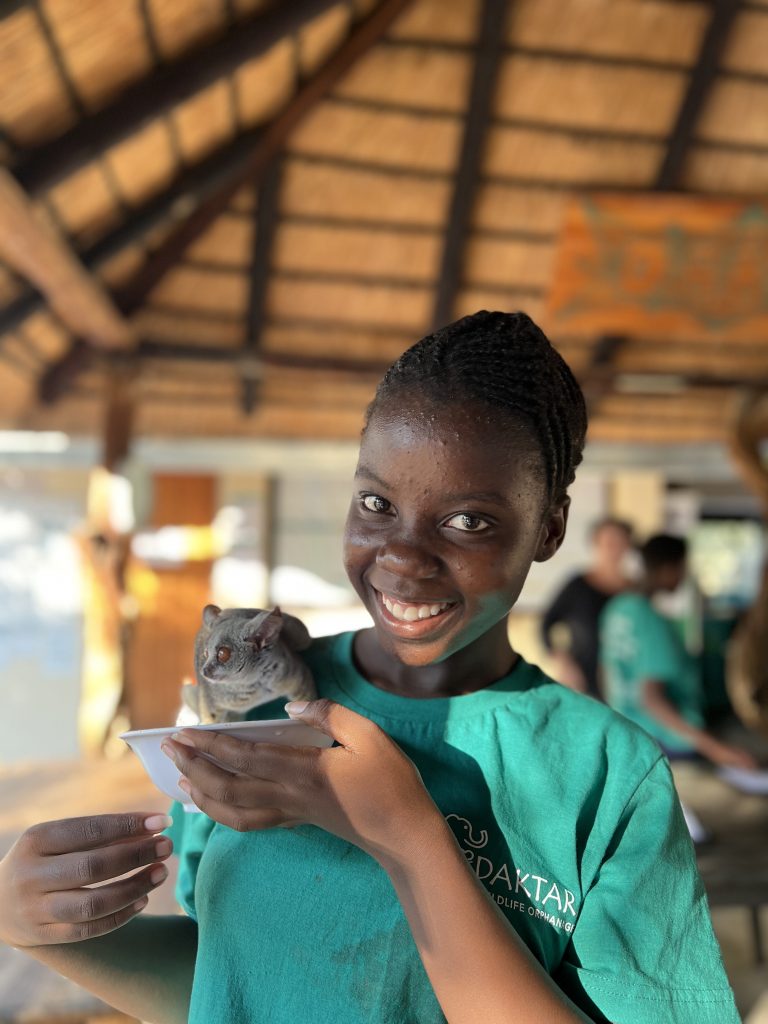
And they meet the animals living at DAKTARI.
The animals become ambassadors.
A child might learn about the importance of predators by meeting a rescued animal. They might discover why snakes play an important role in an ecosystem. They might learn about pollution by seeing how waste can affect the environment.
These experiences can make environmental education tangible.
It becomes something they can see, touch, question and experience.
And sometimes, that is what makes a lesson stay with you.
The animals are not the destination — they are the teachers
One of the things that makes DAKTARI particularly interesting is the role of its rescued animals.
They are not there simply for visitors to look at.
They are part of the educational program.
Through them, children can discover how different species behave, what role they play in ecosystems and why wild animals should be respected and protected.
The animals provide a starting point for much bigger conversations about conservation.
About habitat loss, pollution, human-wildlife conflict and responsible behavior towards wildlife.
And ultimately, about the choices we make as people.
Taking conservation beyond DAKTARI
Education shouldn’t stop when the children leave the bush school.
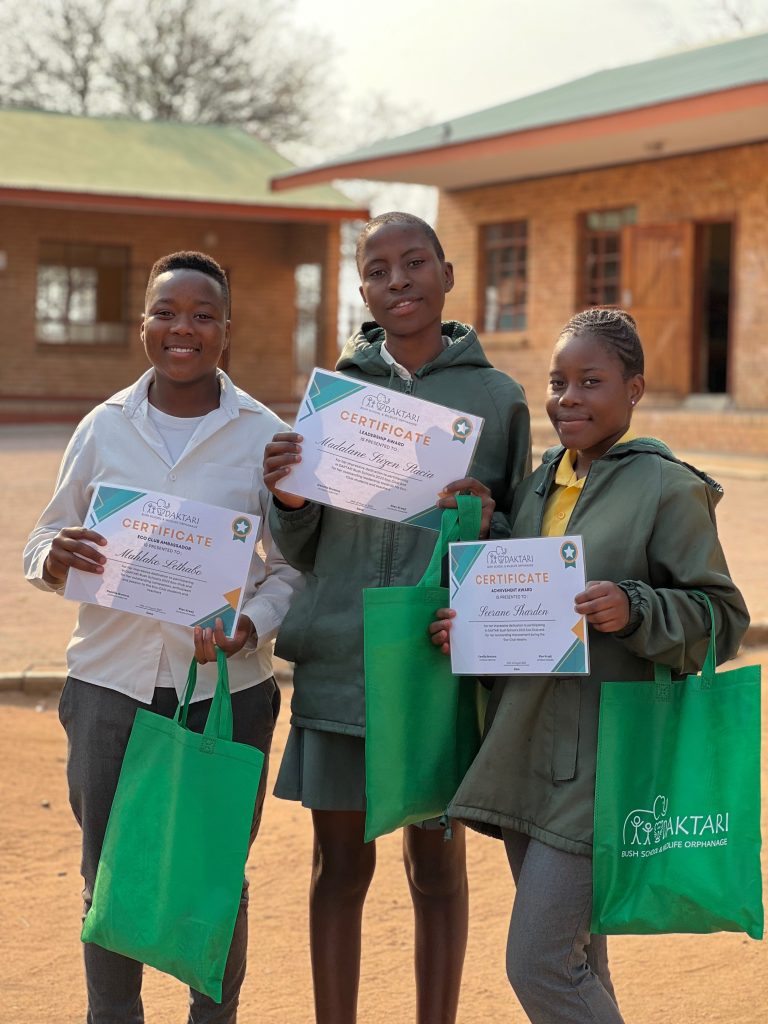
This is why DAKTARI also works with local schools through Eco Clubs, helping children continue exploring environmental issues in their own communities.
This is an important part of conservation education.
Because protecting nature isn’t only something that happens inside a national park or a private reserve.
It happens in villages.
At schools.
In people’s homes.
And in the everyday choices we make.
A lesson about waste can influence how a child thinks about plastic.
Learning about wildlife can change how someone sees an animal they encounter in their community.
And understanding the value of nature can help create a generation that is more likely to want to protect it.
Why this matters to us at Kamoka
At Kamoka Camp, we are surrounded by the landscapes and wildlife that make Limpopo such a special part of South Africa.
But we also know that the conservation story here is much bigger than the animals we see from our camp.
It includes the people who live here.
The organizations working to protect nature.
The guides who share their knowledge.
The communities who live alongside wildlife.
And the children who will eventually decide what the future of this environment looks like.
This is why our connection with DAKTARI is so meaningful to us.
It is an opportunity for our guests to discover another side of conservation in South Africa — one that isn’t necessarily visible when you go on safari.
You may spend a morning looking for elephants in the bush.
At DAKTARI, you can spend time thinking about who will be protecting those elephants in 10, 20 or 30 years’ time.
A different kind of conservation experience
When traveling through South Africa, it is easy to focus on the spectacular.
The Big Five.
The landscapes.
The sunsets.
The safari photographs.
But some of the most important conservation work happens quietly, away from the game-drive vehicles and tourist routes.
It happens when a child asks a question.
When they discover something they didn’t know.
When an animal changes the way they think about wildlife.
And when that experience follows them home.
Perhaps that is one of the most powerful things we can do for conservation:
not simply protect nature for the next generation, but help the next generation understand why it is worth protecting.
Discover conservation beyond the safari
If you are staying in the Hoedspruit and Limpopo region and would like to discover another side of South African conservation, a visit to DAKTARI Bush School offers an opportunity to learn about environmental education, rescued animals and the work being done to inspire young people to care for nature.
At Kamoka, we believe that meaningful travel is not only about seeing a destination.
It is also about understanding the people, organizations and stories that make that destination what it is.
And DAKTARI is an important part of that story.